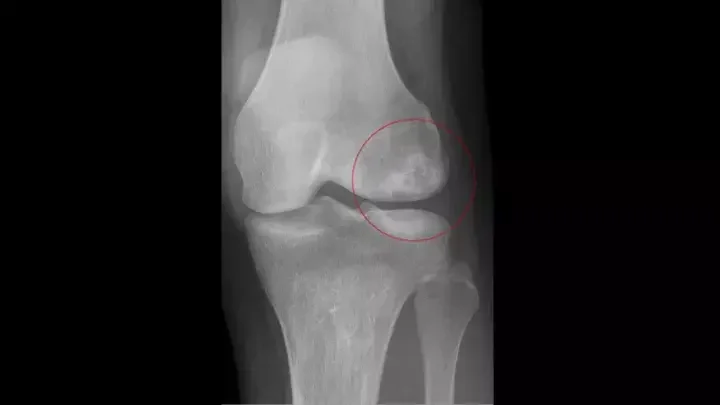
A condition caused by loss of blood supply to the knee bone, leading to bone damage and joint deterioration
Avascular necrosis (AVN), also known as osteonecrosis, is a condition that occurs when the blood supply to a section of bone is disrupted. Without sufficient blood flow, the affected bone tissue begins to die, which can lead to the collapse of the bone structure and damage to the surrounding joint. In the knee, AVN most commonly affects the femoral condyles (the rounded ends of the thigh bone), and if left untreated, may lead to arthritis and joint dysfunction.
Dr George Awwad offers comprehensive evaluation and tailored treatment options for patients with early or advanced AVN of the knee. Depending on the stage and severity of the condition, both non-surgical and surgical options may be considered.
Symptoms of avascular necrosis in the knee
Avascular necrosis may develop gradually, with symptoms becoming more noticeable as the condition progresses. In its early stages, AVN may not cause any symptoms. As the bone begins to weaken and collapse, patients may experience:
- Pain in the knee, particularly during weight-bearing activities
- Tenderness and swelling, especially around the inner side of the knee
- Stiffness or a feeling of tightness within the joint
- Reduced range of motion, making it harder to bend or fully straighten the knee
- Limping or altered gait, often due to pain or weakness in the joint
- Increased discomfort at night or after periods of rest
Symptoms may mimic other conditions such as osteoarthritis or meniscal injury, which is why accurate diagnosis is important.
Common causes and risk factors
Avascular necrosis occurs when the blood flow to a section of bone is reduced or completely interrupted. In the knee, this may be related to a number of factors:
- Trauma or injury (such as a fracture or dislocation affecting the blood vessels)
- Corticosteroid use, particularly with long-term or high-dose treatment
- Excessive alcohol intake
- Certain medical conditions, such as lupus, sickle cell disease, or coagulation disorders
- Radiation therapy or chemotherapy
- Decompression sickness (also known as “the bends”)
In some cases, AVN of the knee occurs without an identifiable cause. This is referred to as idiopathic AVN.
How AVN of the knee is diagnosed
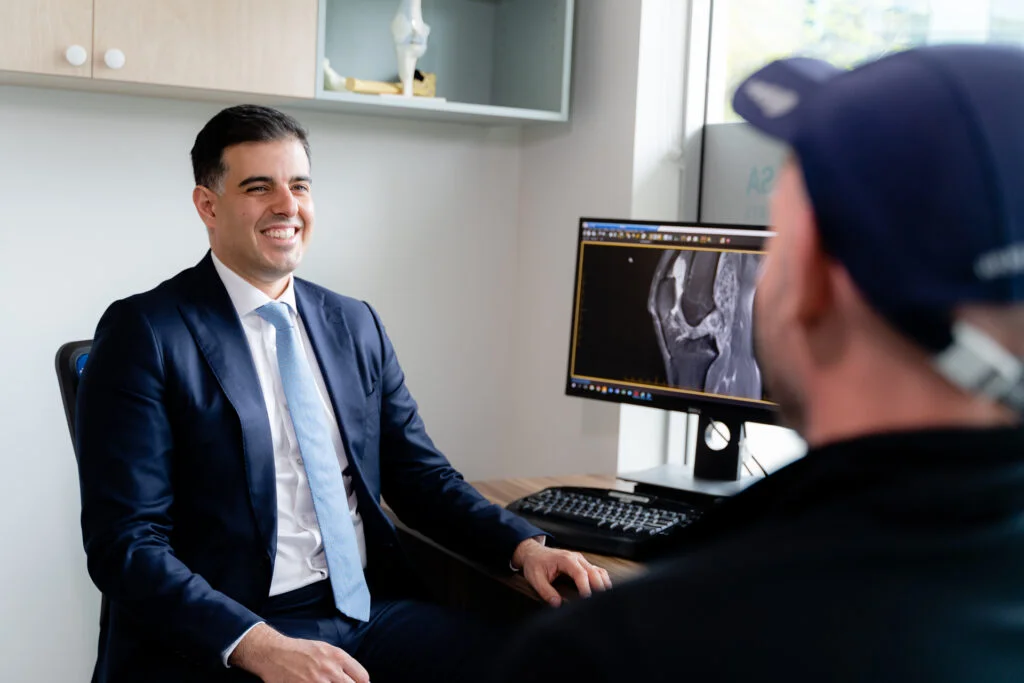
Accurate diagnosis involves a combination of clinical evaluation and imaging. During your consultation, Dr Awwad will assess your symptoms, medical history, and lifestyle factors.
Investigations may include:
- X-rays: May appear normal in early stages but can detect bone collapse in later stages
- MRI scan: The most sensitive test for early AVN, showing changes in bone structure and blood supply
- CT scan: May be used to evaluate the extent of bone collapse and plan surgical intervention
The diagnosis is often confirmed with an MRI, especially when X-rays appear normal but symptoms persist.
Stages of avascular necrosis in the knee
AVN progresses in stages, and treatment is often guided by how advanced the condition is:
- Stage I: Normal X-rays, but MRI shows bone damage
- Stage II: Changes visible on X-rays, no bone collapse
- Stage III: Subchondral bone collapse, joint surface still intact
- Stage IV: Joint surface collapse and secondary osteoarthritis
Early diagnosis may allow for joint-preserving procedures, while more advanced cases may require joint replacement surgery.
Treatment options for avascular necrosis of the knee
Treatment is tailored to the stage of AVN, the severity of symptoms, and your overall health and lifestyle.
Non-surgical treatments
- Medications: Anti-inflammatories, pain relievers, and joint injections (e.g. cortisone)
- Physiotherapy: Strengthening exercises and joint mobilisation can support function and reduce pain
- Activity modification: Reducing high-impact activities and using supportive footwear or braces
- Weight management: Reducing body weight can decrease the load on your knee joint
Surgical treatments
If symptoms are not controlled with conservative measures, surgery may be recommended:
-
Knee arthroscopy: A keyhole procedure to remove or repair damaged tissue in the joint causing mechanical symptoms
-
Partial knee replacement: Replacement of only the affected compartment of the knee
-
Total knee replacement: Replacement of all surfaces of the knee joint for advanced arthritis
Dr Awwad will discuss the most appropriate treatment options based on your age, activity level, and goals. In many cases, early intervention can help delay progression and reduce the need for joint replacement surgery.
Non-surgical treatments
- Medications: Anti-inflammatories, pain relievers, and joint injections (e.g. cortisone)
- Physiotherapy: Strengthening exercises and joint mobilisation can support function and reduce pain
- Activity modification: Reducing high-impact activities and using supportive footwear or braces
- Weight management: Reducing body weight can decrease the load on your knee joint
Surgical treatments
If symptoms are not controlled with conservative measures, surgery may be recommended:
-
Knee arthroscopy: A keyhole procedure to remove or repair damaged tissue in the joint causing mechanical symptoms
-
Partial knee replacement: Replacement of only the affected compartment of the knee
-
Total knee replacement: Replacement of all surfaces of the knee joint for advanced arthritis
Dr Awwad will discuss the most appropriate treatment options based on your age, activity level, and goals. In many cases, early intervention can help delay progression and reduce the need for joint replacement surgery.
When to seek specialist advice
If you are experiencing persistent knee pain, especially after trauma, steroid use, or for no obvious reason, early investigation is important. Early intervention for avascular necrosis may help preserve the joint and delay more invasive treatment. Dr George Awwad provides personalised care for patients with AVN of the knee, combining advanced imaging, evidence-based surgical techniques, and comprehensive recovery planning.
Book An Appointment