
Knee Fractures & Trauma
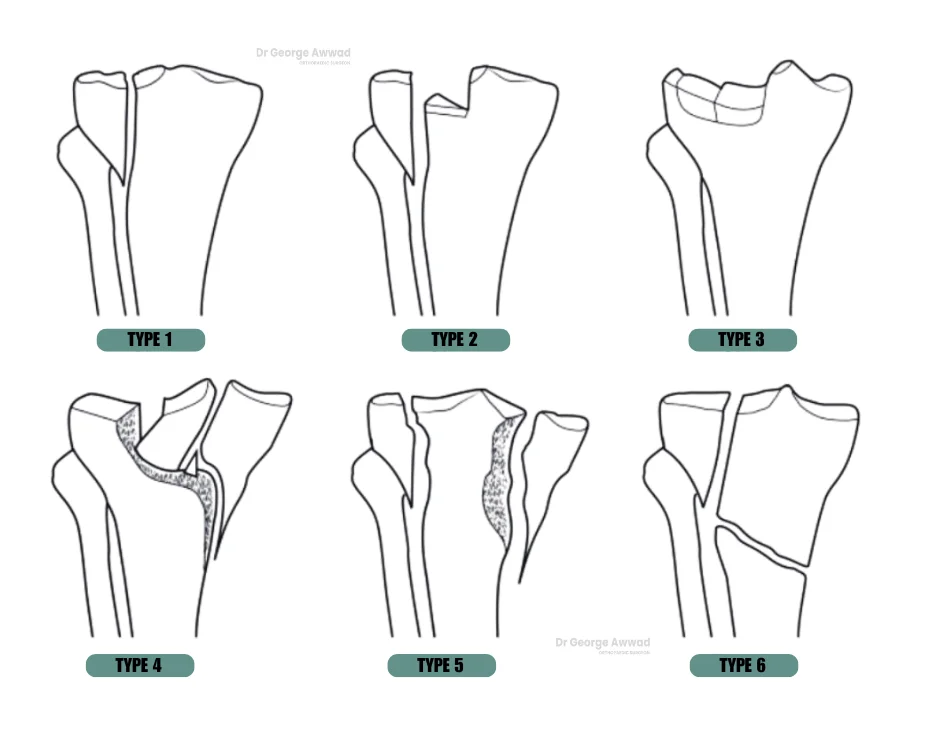
Managing fractures around the knee joint caused by accidents, falls, and high-impact injuries
Knee fractures and traumatic injuries can cause significant pain, instability, and loss of function. These injuries often occur suddenly due to falls, sporting accidents, or motor vehicle collisions, and they may involve the bones, ligaments, cartilage, or soft tissues surrounding the knee.
Dr George Awwad is experienced in treating acute knee trauma and fracture related injuries, with a focus on restoring joint stability, alignment, and long-term mobility.
Understanding knee fractures
- Femur (thigh bone)
- Tibia (shin bone)
- Patella (kneecap)
Fractures may occur in any of these bones due to direct impact, twisting injuries, or high energy trauma. Some knee fractures are straightforward and remain well aligned, while others are complex and may require surgical repair to restore the joint’s function and prevent long-term complications.
Common types of knee fractures and trauma
Patella fractures
A break in the kneecap, often caused by a fall directly onto the front of the knee or a high-impact blow. This can disrupt the function of the extensor mechanism (the system that allows you to straighten your knee).
Distal femur fractures
These occur just above the knee joint where the femur flares out. They may be caused by trauma or weakened bone (such as osteoporosis) and can involve the knee’s articular surface.
Symptoms of knee trauma or fracture
- Sudden, severe pain in or around the knee
- Inability to bear weight or walk
- Swelling, bruising, or visible deformity
- Difficulty bending or straightening the knee
- A “popping” sound or sensation at the time of injury
- A feeling that the knee is unstable or giving way
Diagnosis of knee trauma and fractures
- Clinical history: Understanding how the injury occurred and your functional limitations
- Physical examination: Checking for swelling, deformity, joint movement, and neurovascular status
- Imaging:
- X-rays to identify bone fractures and alignment
- CT scans for detailed evaluation of complex fractures
- MRI scans to assess soft tissue structures such as ligaments, cartilage, and menisci
Treatment options for knee fractures and trauma
Non-surgical treatment
- Immobilisation: Bracing or casting to allow healing
- Crutches: To avoid weight-bearing during the healing period
- Pain management
- Physiotherapy: Introduced as the fracture heals to restore strength and movement
Surgical treatment
- The fracture is displaced or unstable
- The joint surface is involved
- The extensor mechanism (e.g. patella fracture) is disrupted
- There is associated ligament damage
- The knee is dislocated or neurovascular structures are at risk
- Open Reduction and Internal Fixation (ORIF): Realigning the bone and fixing it with screws, plates, or rods
- Ligament repair or reconstruction: If soft tissue stabilisers are damaged
- Meniscus or cartilage repair: If intra-articular structures are affected
- External fixation: In complex or staged trauma cases
- Arthroscopy-assisted procedures: For minimally invasive repair in select injuries
When to seek urgent help
Seek immediate medical attention if you experience:
- Sudden, severe knee pain after a fall or trauma
- Visible deformity or swelling
- Inability to move or bear weight
- Numbness, tingling, or coldness in the leg or foot
These may indicate a serious injury requiring urgent orthopaedic care.
If you’ve sustained a knee injury or are experiencing symptoms following trauma, Dr George Awwad can provide a thorough evaluation and discuss the most appropriate treatment pathway to support your recovery.