Hip replacement surgery has evolved significantly over the past decade. One of the approaches increasingly used by orthopaedic surgeons is the direct anterior approach, a muscle-sparing technique that allows access to the hip joint through natural spaces between the muscles at the front of the hip.
While no single surgical approach is suitable for every patient, the direct anterior approach may offer several potential advantages for people undergoing hip replacement. This article explains what the technique involves, how it differs from traditional approaches, and what patients can expect when discussing it with Dr George Awwad.
What is the direct anterior approach?
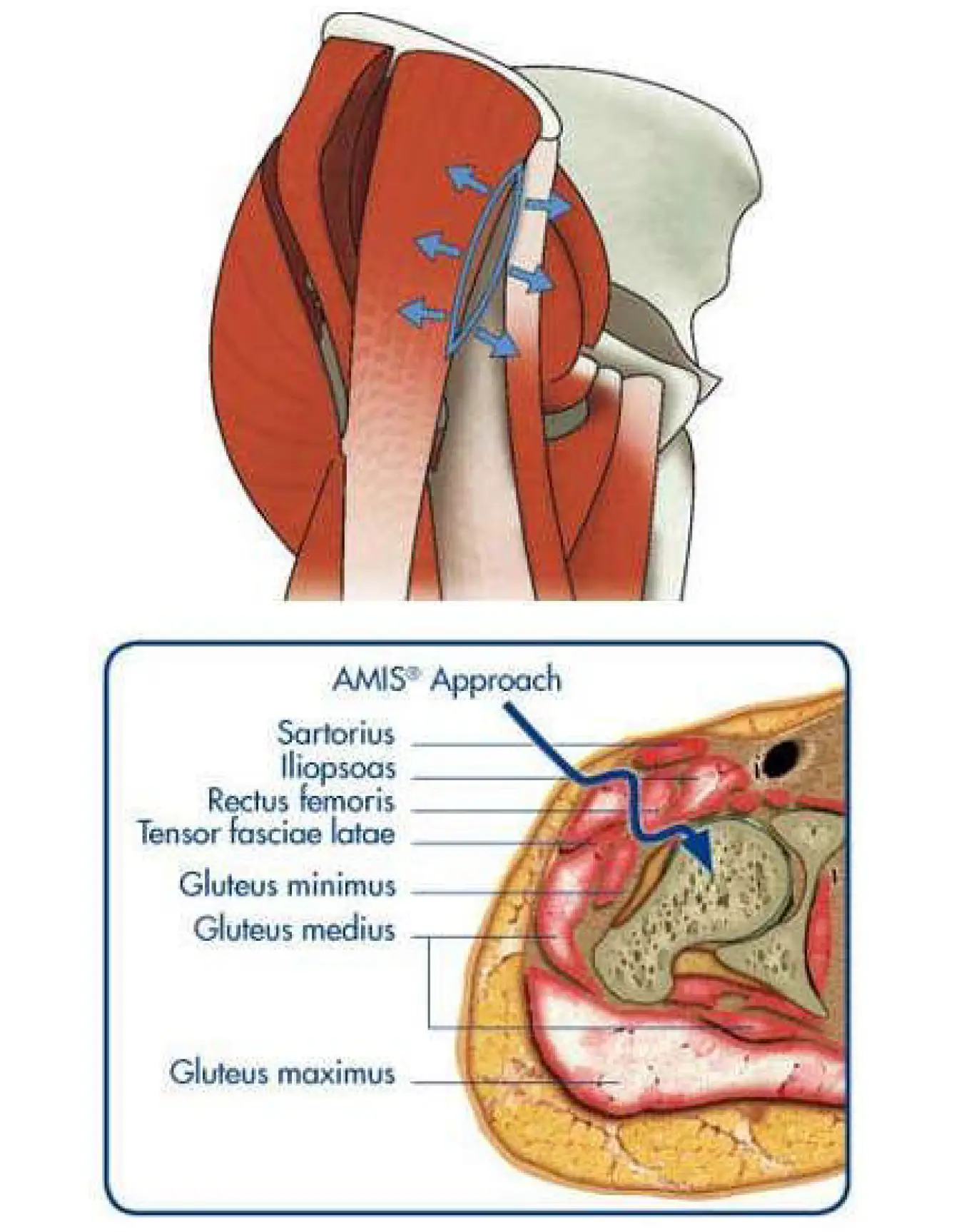
The direct anterior approach is a minimally invasive technique that allows the surgeon to reach the hip joint through the front of the body. Unlike some traditional approaches that require cutting through muscle, the anterior technique uses natural intervals between muscles and soft tissues.
This may help reduce disruption to surrounding structures, although outcomes vary between individuals and depend on many factors including anatomy, mobility, and overall health.
How the anterior approach differs from other techniques
Hip replacement can be performed through several approaches, including:
- Direct anterior
- Posterior
- Lateral
Each method has its own benefits and considerations. The anterior approach is valued for its muscle-sparing pathway, while the posterior approach may be preferred in cases involving complex anatomy, previous surgery, or certain implant requirements.
During your consultation, Dr Awwad will assess your hip condition, review your imaging, and recommend the approach that is safest and most appropriate for your situation.
Potential advantages of the direct anterior approach
While results can vary between patients, possible benefits of the anterior approach may include:
- Reduced muscle disruption, as the approach works between muscle planes
- Stable implant positioning, supported by clear visual access to the hip joint
- A more natural movement pattern, which may help with early mobility
- A front-of-hip incision, which some patients may prefer cosmetically
- Suitability for certain body types and conditions
It is important to note that not all patients are candidates for this method, and the most suitable approach depends on a combination of anatomical and clinical factors.
The role of imaging and planning
Accurate pre-operative planning is essential for any hip replacement. Imaging such as X-rays or CT scans helps assess:
- Hip alignment
- Bone quality
- Leg length
- Joint wear patterns
- Implant requirements
Dr Awwad uses detailed imaging and planning tools to tailor the surgical approach and implant selection to each patient’s individual anatomy.
What to expect on the day of surgery
Regardless of the approach used, the overall process of hip replacement follows similar steps:
- Hospital admission and preparation
- Anaesthesia review
- Surgical procedure performed by Dr Awwad
- Early mobilisation with physiotherapy support
- Pain management and wound care
- Discharge planning and follow-up appointments
If the anterior approach is suitable, it may support early mobility for some patients, although individual recovery times vary.
Recovery and rehabilitation
Rehabilitation is a key component of hip replacement recovery. Physiotherapy focuses on:
- Strengthening surrounding muscles
- Improving range of motion
- Supporting balance and gait retraining
- Gradually returning to daily activities
Dr Awwad will provide a structured plan based on your individual needs. Recovery timeframes vary between patients and depend on general health, pre-operative mobility, and adherence to rehabilitation.
Who is a candidate for the anterior approach?
The direct anterior approach may be considered for patients with:
- Hip arthritis requiring replacement
- Favourable anatomy for an anterior pathway
- Good bone quality
- No history of complex hip surgery
However, factors such as obesity, previous trauma, abnormal anatomy, or certain medical conditions may influence whether this technique is appropriate. During your consultation, Dr Awwad will review your imaging, medical history, and goals to help determine the safest option.