
Knee Ligament Injuries
A common knee ligament injury affecting stability and movement
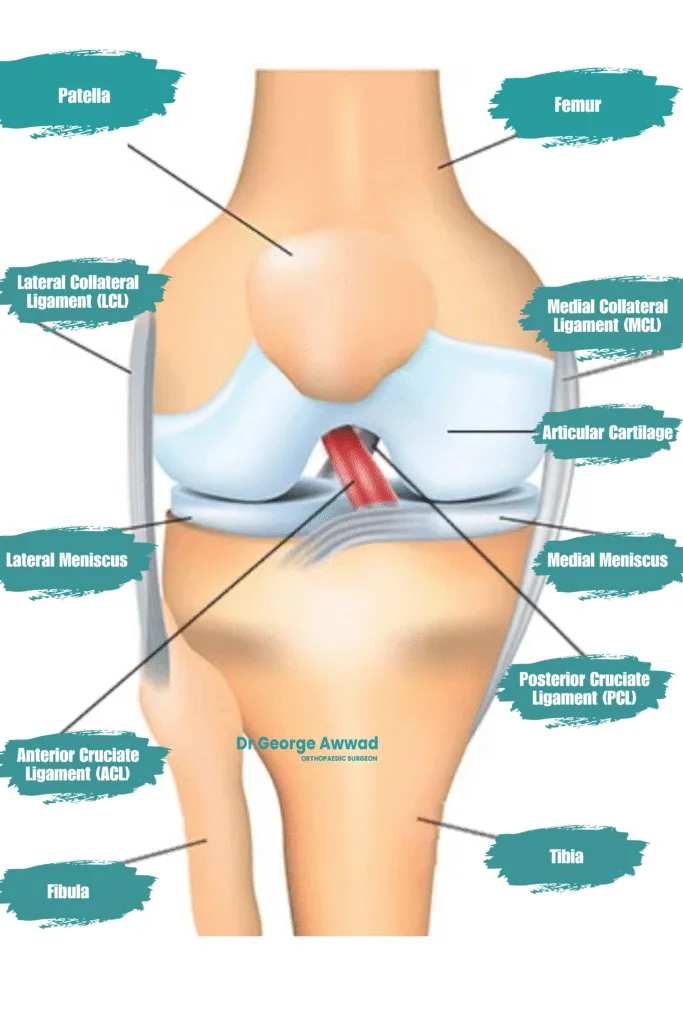
Your knee is stabilised by four main ligaments that help support movement, protect the joint, and allow you to walk, bend, pivot, and run. These ligaments can become stretched or torn due to trauma or sporting injuries, potentially leading to pain, swelling, and joint instability. Dr George Awwad provides comprehensive care for acute and chronic knee ligament injuries, offering both non-surgical and surgical management tailored to your level of activity, goals, and recovery needs.
The major knee ligaments
- Anterior Cruciate Ligament (ACL): Prevents the shin bone (tibia) from sliding too far forward and controls rotational movement.
- Posterior Cruciate Ligament (PCL): Prevents the tibia from moving too far backward and supports the knee during deceleration.
- Medial Collateral Ligament (MCL): Provides stability to the inner (medial) side of the knee.
- Lateral Collateral Ligament (LCL): Supports the outer (lateral) side of the knee.
Causes of knee ligament injuries
- Sudden changes in direction or pivoting movements
- Landing awkwardly from a jump
- Direct impact to the knee (e.g. sporting tackle or fall)
- Hyperextension of the knee joint
- Twisting injuries during sport or physical activity
Signs and symptoms of a ligament injury
- A popping sound or sensation at the time of injury
- Immediate pain and swelling
- Instability or the feeling of the knee “giving way”
- Reduced range of motion
- Difficulty walking, bearing weight, or returning to sport
- Bruising or tenderness around the joint
If more than one ligament is injured, symptoms may be more severe, and the risk of long-term instability or damage to cartilage and menisci increases.
Diagnosing ligament injuries
- A discussion of the mechanism of injury, symptoms, and functional limitations
- A physical examination to assess joint stability, swelling, and range of motion
- X-rays, where necessary, to exclude bone injuries
- MRI scanning to confirm the specific ligament injury and assess for associated damage to cartilage, bone, or menisci
Treatment options
Non-surgical treatments
- Rest, ice, compression, and elevation (RICE) in the early phase
- Physiotherapy to strengthen the surrounding muscles and restore motion
- Bracing or taping to support the joint during healing
- A graded return to sport or activity
Surgical treatment: ACL reconstruction
- Complete ligament ruptures (e.g. ACL, PCL)
- Multiligament injuries (involving more than one ligament)
- Persistent instability that does not improve with physiotherapy
- Athletes or physically active individuals aiming to return to sport
- Ligament reconstruction using a graft from your hamstring, patellar, or quadriceps tendon
- Repair of torn ligaments if performed early after injury
- Reconstruction of multiple ligaments in complex injuries
When to seek orthopaedic care
If you’ve experienced a knee injury with swelling, instability, or difficulty bearing weight, early assessment may help prevent further damage. Prompt diagnosis and appropriate treatment may support faster recovery and a more successful return to activity. Dr George Awwad provides tailored care for knee ligament injuries, from early diagnosis and imaging through to surgical reconstruction and rehabilitation. Whether you’re an athlete or simply want to return to pain-free movement, Dr Awwad can help you understand your options.