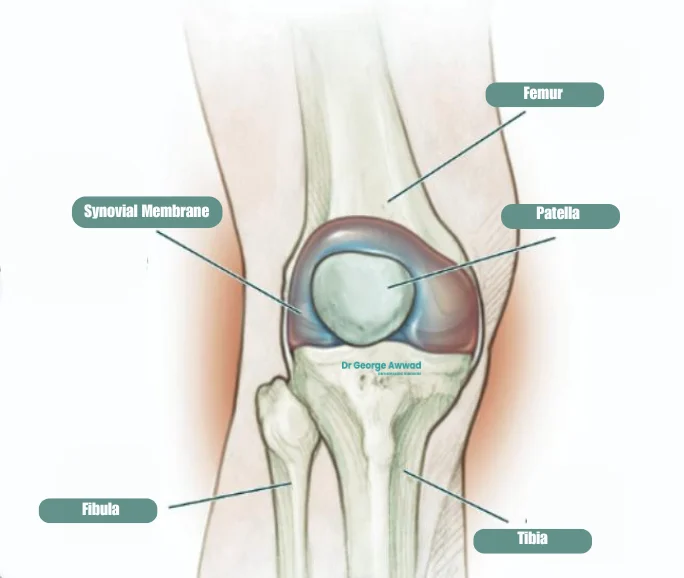
Relieving joint pain through debridement and synovectomy surgical procedures
Debridement and synovectomy are two surgical procedures that may be used to treat joint pain, swelling, and restricted movement caused by damaged or inflamed tissue. These procedures are typically performed arthroscopically and may help relieve symptoms in patients with chronic joint inflammation, early-stage arthritis, or mechanical irritation from loose or damaged tissue within the joint.
Dr George Awwad may recommend debridement or synovectomy as part of a joint preservation strategy, either alone or in combination with other procedures such as meniscal repair or cartilage treatment. This page outlines what each procedure involves, who may benefit, and what to expect during recovery.
What is joint debridement?
Joint debridement is a surgical procedure that involves the careful removal of damaged, inflamed, or loose tissue from within the knee joint. This may include fragments of cartilage, bone spurs, inflamed synovial tissue, scar tissue or other debris that is interfering with the smooth movement of the joint.
The goal of joint debridement is to reduce pain and improve joint function. It is typically performed using a minimally invasive technique called arthroscopy, which involves inserting a small camera and specialised instruments through tiny incisions around the knee.
During the procedure, Dr George Awwad visually inspects the inside of the joint, identifies any areas of damage or inflammation, and removes or smooths the affected tissue. This may help restore more natural movement and reduce mechanical irritation caused by loose or rough joint surfaces.
As with all procedures, Dr Awwad carefully evaluates your condition and imaging studies to determine if debridement may play a role in your broader treatment plan.
What is a synovectomy?
A synovectomy is a surgical procedure that involves removing part, or all of the synovium, the thin lining of tissue that surrounds and lubricates the knee joint. The synovium normally produces fluid that helps the joint move smoothly. In some conditions however, such as rheumatoid arthritis, inflammatory arthritis, or chronic synovitis after injury, this tissue can become inflamed and thickened.
When the synovium remains inflamed despite medications and other non-surgical measures, it may cause ongoing pain, swelling, stiffness, and reduced mobility in the knee. A synovectomy may be recommended to relieve symptoms, protect the joint from further damage, and help improve function. The procedure is often performed using minimally invasive arthroscopy, where small instruments and a camera are inserted through tiny incisions in the knee. This approach typically allows for a shorter recovery time compared to open surgery. In some more complex cases, an open synovectomy may be required for complete removal of the diseased tissue.
Dr George Awwad carefully assesses each patient’s condition to determine whether synovectomy may be beneficial, taking into account the underlying cause of synovial inflammation, the extent of joint damage, and overall health factors.
What conditions can be treated with debridement or synovectomy?
Joint debridement and synovectomy are orthopaedic procedures that may be recommended to relieve pain, reduce swelling, and improve joint function in a range of inflammatory or degenerative joint conditions. These procedures are typically performed arthroscopically (via keyhole surgery) and can offer a minimally invasive approach to managing chronic or recurrent symptoms that have not responded to non-surgical treatments such as medications or physiotherapy.
Below are some of the common conditions that may be treated with either joint debridement, synovectomy, or a combination of both:
Osteoarthritis (OA)
In cases of knee osteoarthritis, degenerative changes can lead to the buildup of loose damaged cartilage or bone fragments that causes mechanical symptoms such as locking, catching or clicking. Arthroscopic debridement may help by:
-
Debride loose cartilage flaps causing locking -
Removing loose bodies (fragments of bone or cartilage) that become stuck in the joint
While debridement is not a cure for osteoarthritis, it may provide short-term relief in selected patients with mechanical symptoms such as catching or locking.
Inflammatory Arthritis (e.g. Rheumatoid Arthritis)
In autoimmune conditions such as rheumatoid arthritis, the synovial lining of the joint becomes inflamed and thickened. This can result in:
-
Persistent joint pain and swelling -
Stiffness and loss of range of motion -
Progressive joint damage over time
A synovectomy may be considered to remove the inflamed synovial tissue, particularly if the disease is affecting one or two joints and is not well-controlled with medications. This may help reduce symptoms and slow the progression of joint damage.
Pigmented Villonodular Synovitis (PVNS) and Synovial Chondromatosis
These are rare conditions that affect the synovial lining of the joint:
-
PVNS involves the abnormal overgrowth of pigmented synovial tissue, which may damage cartilage and bone. -
Synovial chondromatosis causes the formation of cartilage nodules within the joint lining, which may become loose and lead to pain, swelling, or locking.
Both conditions may be managed surgically through arthroscopic or open synovectomy, sometimes combined with debridement or removal of loose bodies.
Septic Arthritis (Infection)
In some cases of septic arthritis or joint infection, especially if the infection has led to cartilage damage or inflammation of the synovium, a washout (lavage) and debridement may be required to:
-
Clear out infected or necrotic material -
Reduce bacterial load -
Improve joint movement
This is usually done as an urgent procedure in combination with antibiotics.
Post-Traumatic Synovitis or Loose Bodies
After trauma or injury to the joint (e.g. meniscal tear or ligament injury), patients may develop persistent inflammation or loose fragments of cartilage or bone within the joint space. Arthroscopic debridement can assist in:
-
Removing these loose bodies or scar tissue -
Reducing inflammation -
Helping restore smoother movement of the joint
Tailored Treatment for Each Condition
Not all patients with these conditions will require debridement or synovectomy. During your consultation, Dr George Awwad will perform a thorough clinical assessment, review your imaging, and discuss whether surgical treatment may be appropriate based on:
-
The severity and type of joint damage -
Your age, activity level, and goals -
Your response to previous non-surgical treatments
The aim is to preserve joint function, relieve symptoms, and delay or avoid more extensive surgery such as joint replacement if possible.
When might debridement or synovectomy be recommended?
Joint debridement or synovectomy surgery may be considered when non-surgical treatments such as rest, anti-inflammatory medications, corticosteroid injections, or physiotherapy have not provided sufficient relief. These procedures are typically used to address joint pain, swelling, or mechanical symptoms (such as catching or locking) caused by damage or inflammation within the joint.
Dr George Awwad may recommend one or both of these procedures based on the underlying condition, your symptoms, and the severity of joint involvement.
Situations where debridement may be considered:
-
Mechanical symptoms due to loose fragments: If cartilage or bone fragments are floating within the joint space and causing catching, locking, or giving way. -
Meniscal or cartilage injury: When damaged soft tissue is causing persistent irritation or obstruction within the joint. -
Post-traumatic joint issues: Following injury, debris or scar tissue may form within the joint and contribute to limited movement or discomfort.
Debridement is not typically recommended for advanced arthritis, as the benefits may be limited if the cartilage damage is widespread.
Situations where synovectomy may be considered:
-
Inflammatory arthritis: In conditions such as rheumatoid arthritis, psoriatic arthritis, or lupus, thickened and inflamed synovial tissue may be removed to reduce pain and prevent further joint damage. -
Recurrent joint swelling: If chronic synovitis (persistent joint lining inflammation) continues despite medical treatment. -
PVNS (Pigmented Villonodular Synovitis): To remove diseased synovial tissue and reduce recurrence risk. -
Synovial chondromatosis: When cartilage nodules form within the synovium and interfere with joint movement. -
Infection control: As part of treatment for joint infections (septic arthritis) to remove infected tissue and reduce bacterial load.
Individualised Assessment
The decision to proceed with debridement or synovectomy surgery is highly individualised. During your consultation, Dr George Awwad will:
-
Carefully assess your symptoms and clinical history -
Review imaging such as X-rays or MRI scans -
Consider your overall joint function, level of inflammation, and long-term goals
If surgery is considered appropriate, Dr Awwad will explain the procedure in detail, discuss the potential risks and benefits, and provide you with a tailored treatment and recovery plan.
Who may not be suitable for these procedures?
Not everyone experiencing joint pain or inflammation will benefit from a debridement or synovectomy. These procedures are generally reserved for specific conditions and stages of joint disease and may not be appropriate in all cases. Dr George Awwad will evaluate several factors before recommending surgery.
Patients with advanced osteoarthritis
Joint debridement is generally not effective when there is widespread cartilage loss or advanced degenerative arthritis. In such cases, removing loose tissue or smoothing damaged cartilage may not provide significant or lasting relief. Joint replacement surgery may be a more appropriate option when joint surfaces are severely worn.
Limited benefit in longstanding symptoms
For patients who have had chronic joint symptoms for many years with structural damage that is no longer reversible, the potential benefit of debridement or synovectomy may be minimal. Surgical removal of damaged tissue cannot reverse long-standing degeneration.
Individuals with low inflammatory burden
Synovectomy is typically performed for patients with significant synovial inflammation. If a patient’s inflammatory arthritis is well-controlled with medication and synovitis is minimal, a synovectomy may not be necessary and could pose unnecessary risk.
Patients with significant joint instability
If the primary cause of joint pain is due to instability from ligament damage or structural abnormalities (such as malalignment), debridement or synovectomy alone may not address the root issue. In such cases, additional or alternative surgical strategies may be required.
Medical conditions that increase surgical risk
Patients with certain medical conditions may not be suitable candidates for elective arthroscopic surgery, including:
-
Poorly controlled diabetes or heart disease -
Bleeding disorders -
Active infection -
Immunosuppression -
Inability to safely undergo anaesthesia
In these cases, Dr Awwad may recommend medical optimisation or non-surgical options.
Personalised Assessment Is Essential
The decision to proceed with joint debridement or synovectomy depends on a detailed understanding of your joint condition, overall health, and treatment goals. Dr George Awwad will perform a comprehensive assessment and imaging review to determine whether these procedures are likely to help relieve your symptoms or improve your joint function.
Joint debridement is generally not effective when there is widespread cartilage loss or advanced degenerative arthritis. In such cases, removing loose tissue or smoothing damaged cartilage may not provide significant or lasting relief. Joint replacement surgery may be a more appropriate option when joint surfaces are severely worn.
For patients who have had chronic joint symptoms for many years with structural damage that is no longer reversible, the potential benefit of debridement or synovectomy may be minimal. Surgical removal of damaged tissue cannot reverse long-standing degeneration.Synovectomy is typically performed for patients with significant synovial inflammation. If a patient’s inflammatory arthritis is well-controlled with medication and synovitis is minimal, a synovectomy may not be necessary and could pose unnecessary risk.
If the primary cause of joint pain is due to instability from ligament damage or structural abnormalities (such as malalignment), debridement or synovectomy alone may not address the root issue. In such cases, additional or alternative surgical strategies may be required.
Patients with certain medical conditions may not be suitable candidates for elective arthroscopic surgery, including:
-
Poorly controlled diabetes or heart disease -
Bleeding disorders -
Active infection -
Immunosuppression -
Inability to safely undergo anaesthesia
In these cases, Dr Awwad may recommend medical optimisation or non-surgical options.
The decision to proceed with joint debridement or synovectomy depends on a detailed understanding of your joint condition, overall health, and treatment goals. Dr George Awwad will perform a comprehensive assessment and imaging review to determine whether these procedures are likely to help relieve your symptoms or improve your joint function.
Arthroscopic vs open technique: how are these surgeries performed?
Joint debridement and synovectomy procedures may be performed using either a minimally invasive (arthroscopic) approach or an open surgical approach. The choice of technique depends on the specific joint being treated, the extent of the damage or inflammation, and the patient’s individual needs.
Arthroscopic technique (minimally invasive surgery)
Arthroscopy is the most common approach used for joint debridement and synovectomy. This technique involves the use of a small camera (arthroscope) and specialised instruments inserted through tiny incisions around the joint.
Key steps include:
-
Small incisions (portals) are made to access the joint. -
Sterile fluid is introduced to expand the joint and improve visibility. -
A fibre-optic camera projects images of the joint interior onto a screen.
Arthroscopy offers several benefits, including:
-
Smaller incisions and minimal scarring -
Reduced post-operative pain -
Shorter hospital stay -
Faster recovery and return to activity
This approach is commonly used for treating issues in the knee, shoulder, ankle, and wrist.
Open technique (traditional surgery)
In some cases, open surgery may be required to perform a thorough debridement or synovectomy, especially when:
-
There is extensive joint damage -
Arthroscopy cannot reach certain areas -
Open exposure is needed for more precise removal of abnormal tissue
During an open procedure:
-
A longer incision is made over the joint -
The joint is carefully opened to expose the damaged or inflamed structures -
The surgeon directly removes the affected tissue under direct visualisation
Open surgery is more commonly required in joints that are less accessible via arthroscopy, such as the hip or elbow, or when treating severe or chronic synovial disease (e.g. pigmented villonodular synovitis or extensive rheumatoid synovitis).
Which technique is used in your case?
Dr George Awwad will determine the most appropriate technique based on your joint condition, medical history, and treatment goals. Whenever possible, an arthroscopic approach is preferred due to its less invasive nature and shorter recovery time. However, in certain cases, open surgery may offer a more complete and effective treatment.
What are the goals of debridement and synovectomy surgery?
The primary aim of joint debridement and synovectomy is to improve joint function and relieve symptoms caused by damaged, degenerated, or inflamed tissue within a joint. These procedures are tailored to the patient’s specific condition and may help delay or avoid more extensive surgery such as joint replacement.
1. Reduce pain and inflammation
One of the main goals of debridement and synovectomy is to alleviate joint pain and stiffness that may result from:
-
Loose bone or cartilage fragments -
Inflamed synovial tissue (as seen in inflammatory arthritis or PVNS) -
Scar tissue
By removing these irritants, the procedure can help reduce mechanical pain and ongoing inflammation within the joint.
2. Improve joint movement and function
Loose debris, thickened synovial tissue, or rough joint surfaces can interfere with normal joint movement. Removing these elements may:
-
Restore smoother movement -
Improve joint flexibility and range of motion -
Enhance daily functional activities such as walking, bending, or lifting
3. Slow the progression of joint damage
For some patients, especially those with early-stage osteoarthritis or inflammatory joint conditions, these procedures may help:
-
Reduce further cartilage wear -
Control localised inflammation -
Delay the need for more invasive procedures such as joint replacement
4. Improve quality of life
By reducing pain and improving movement, patients may experience:
-
Increased mobility -
Improved ability to participate in daily and recreational activities -
Better sleep and overall wellbeing
5. Diagnose and guide further treatment
In some cases, arthroscopy with debridement or synovectomy may also serve a diagnostic purpose. It allows the surgeon to directly visualise the inside of the joint and determine the extent of cartilage damage, synovial disease, or structural abnormalities. This information can guide future treatment decisions.
1. Reduce pain and inflammation
One of the main goals of debridement and synovectomy is to alleviate joint pain and stiffness that may result from:
-
Loose bone or cartilage fragments -
Inflamed synovial tissue (as seen in inflammatory arthritis or PVNS) -
Scar tissue
By removing these irritants, the procedure can help reduce mechanical pain and ongoing inflammation within the joint.
2. Improve joint movement and function
Loose debris, thickened synovial tissue, or rough joint surfaces can interfere with normal joint movement. Removing these elements may:
-
Restore smoother movement -
Improve joint flexibility and range of motion -
Enhance daily functional activities such as walking, bending, or lifting
3. Slow the progression of joint damage
For some patients, especially those with early-stage osteoarthritis or inflammatory joint conditions, these procedures may help:
-
Reduce further cartilage wear -
Control localised inflammation -
Delay the need for more invasive procedures such as joint replacement
4. Improve quality of life
By reducing pain and improving movement, patients may experience:
-
Increased mobility -
Improved ability to participate in daily and recreational activities -
Better sleep and overall wellbeing
5. Diagnose and guide further treatment
In some cases, arthroscopy with debridement or synovectomy may also serve a diagnostic purpose. It allows the surgeon to directly visualise the inside of the joint and determine the extent of cartilage damage, synovial disease, or structural abnormalities. This information can guide future treatment decisions.
Debridement and synovectomy as part of a joint preservation plan
Joint preservation refers to a treatment approach aimed at maintaining the health and function of a natural joint for as long as possible, particularly in younger or active patients who may wish to delay or avoid joint replacement surgery. In this context, debridement and synovectomy procedures may play a valuable role.
Preserving joint structure and delaying degeneration
Both debridement and synovectomy can be used strategically to manage early or moderate joint damage before more extensive structural changes occur. By addressing mechanical or inflammatory contributors to pain and dysfunction, such as loose bodies or chronic synovial inflammation, these procedures may help:
-
Minimise ongoing joint surface damage -
Improve biomechanics and reduce stress on remaining cartilage -
Delay the progression of osteoarthritis
Complementary to other joint-preserving strategies
Debridement and synovectomy may be part of a broader management plan that includes:
-
Weight management and exercise: to reduce joint load and maintain muscle strength -
Physiotherapy: to support mobility and optimise function -
Injection therapies: such as corticosteroids or hyaluronic acid, to reduce inflammation and support joint lubrication -
Correction of biomechanical issues: through orthotics or bracing -
Realignment procedures: in some cases, a knee osteotomy or other surgical realignment may be recommended in combination to redistribute weight-bearing forces across the joint -
Concurrent management with rheumatologist: in patients with inflammatory conditions
Patient selection is key
Not all patients will benefit from joint preservation surgery. Dr Awwad will assess your individual joint health, lifestyle needs, imaging results, and response to non-surgical treatments when determining whether debridement or synovectomy should be considered as part of a joint preservation plan.
What is the recovery process after surgery?
The recovery process following joint debridement or synovectomy will depend on the severity of the underlying condition, the extent of the procedure, and your individual health and rehabilitation goals. Dr Awwad will provide a personalised plan tailored to your situation.
Hospital stay and immediate post-operative period
Most patients who undergo arthroscopic debridement or synovectomy can return home on the same day. In some cases, an overnight stay may be recommended for observation, particularly if additional procedures are performed at the same time.
Immediately after surgery, you can expect:
-
A padded dressing or compression bandage around the joint -
Instructions on how to manage pain and swelling (e.g. ice packs, elevation, medication) -
Guidance on how much weight you can place through the joint (some patients may require crutches or a walker for a short time)
Wound care and follow-up
Small incisions from the arthroscope are typically closed with sutures or surgical tape. You will receive instructions for:
-
Keeping the wounds clean and dry -
Watching for signs of infection such as redness, discharge, or fever -
Attending a follow-up appointment with Dr Awwad (usually within 1–2 weeks)
Rehabilitation and physiotherapy
A structured rehabilitation program is usually recommended to:
-
Restore joint range of motion -
Improve strength and stability -
Support return to daily activities and work
Dr Awwad may refer you to a physiotherapist who will guide your recovery and tailor exercises to your specific procedure and goals. The pace of progression may vary depending on the amount of inflammation, pre-existing joint degeneration, and whether additional surgical treatments were performed.
Returning to daily activities and work
-
Desk-based or sedentary work: Many patients return within 1–2 weeks -
Light physical work: May require 2–4 weeks off -
Heavy manual labour or high-impact activity: May need 6 weeks or longer before returning, based on recovery progress
Driving can usually resume once you are safely off strong pain medication and have regained adequate control of the joint—Dr Awwad will advise you during follow-up.
What are the potential risks or complications?
As with any surgical procedure, there are some risks associated with joint debridement and synovectomy. Dr Awwad will discuss these with you during your consultation to ensure you understand both the benefits and limitations of surgery.While serious complications are uncommon, it’s important to be aware of the following possibilities:
Infection
Although sterile techniques are used, there is a small risk of developing an infection in the joint or surrounding soft tissue. This may require antibiotics or, in rare cases, further surgery.
Bleeding or swelling
Some bleeding into the joint or soft tissue swelling is expected following surgery. In most cases, this settles with rest, ice, and elevation. Ongoing joint swelling or a return of symptoms may require further investigation.
Stiffness or loss of motion
Occasionally, scar tissue may develop within the joint, leading to reduced flexibility or stiffness. Early rehabilitation and physiotherapy are designed to minimise this risk.
Nerve or blood vessel injury
Although uncommon, nerves or blood vessels near the surgical site may be stretched or injured, causing numbness, weakness, or bruising. These symptoms are usually temporary but should be reported to Dr Awwad if they occur.
Incomplete symptom relief
Not all patients experience complete resolution of their symptoms. The degree of improvement depends on the underlying cause of joint pain, the extent of joint damage, and how the body responds to the procedure.
Recurrent inflammation or joint damage
In some cases, particularly if the underlying condition (such as inflammatory arthritis) continues to progress, symptoms may return over time. Additional treatment or surgery may be required in the future.
Anaesthetic-related risks
These include reactions to medications, nausea, or temporary confusion. The anaesthetist will discuss the most appropriate type of anaesthesia for you and any associated risks before surgery.
Although sterile techniques are used, there is a small risk of developing an infection in the joint or surrounding soft tissue. This may require antibiotics or, in rare cases, further surgery.Some bleeding into the joint or soft tissue swelling is expected following surgery. In most cases, this settles with rest, ice, and elevation. Ongoing joint swelling or a return of symptoms may require further investigation.
Occasionally, scar tissue may develop within the joint, leading to reduced flexibility or stiffness. Early rehabilitation and physiotherapy are designed to minimise this risk.
Although uncommon, nerves or blood vessels near the surgical site may be stretched or injured, causing numbness, weakness, or bruising. These symptoms are usually temporary but should be reported to Dr Awwad if they occur.
Not all patients experience complete resolution of their symptoms. The degree of improvement depends on the underlying cause of joint pain, the extent of joint damage, and how the body responds to the procedure.
In some cases, particularly if the underlying condition (such as inflammatory arthritis) continues to progress, symptoms may return over time. Additional treatment or surgery may be required in the future.
These include reactions to medications, nausea, or temporary confusion. The anaesthetist will discuss the most appropriate type of anaesthesia for you and any associated risks before surgery.
Dr Awwad takes every precaution to minimise these risks and will guide you through the recovery process with ongoing care and support.
Debridement and synovectomy surgery FAQs
These frequently asked questions may help you feel more prepared and informed about what to expect with joint debridement or synovectomy surgery. If you have specific questions, Dr Awwad will address them during your consultation.
What is the difference between debridement and synovectomy?
Debridement involves removing damaged cartilage, loose bodies, or other debris from the joint to improve function and reduce pain. Synovectomy involves removing inflamed or thickened synovial tissue (the lining of the joint), often to relieve inflammation caused by conditions such as rheumatoid arthritis.
Are these procedures always done together?
Not necessarily. Some patients may only require a debridement or a synovectomy, while others may benefit from both procedures performed during the same surgery, depending on the extent and nature of the joint disease.
How long does the surgery take?
Most arthroscopic debridement or synovectomy procedures take around 30 to 60 minutes, depending on the complexity of the case and whether both procedures are performed together.
Will I need to stay in hospital?
These surgeries are often performed as day procedures. However, an overnight stay may be recommended in some cases based on your general health, anaesthetic type, or surgical findings.
When can I return to normal activities?
Most patients can resume light daily activities within a few days. Return to work and sport will depend on the type of surgery performed, your occupation, and your body’s healing response. Dr Awwad and your physiotherapist will provide personalised advice.
Debridement involves removing damaged cartilage, loose bodies, or other debris from the joint to improve function and reduce pain. Synovectomy involves removing inflamed or thickened synovial tissue (the lining of the joint), often to relieve inflammation caused by conditions such as rheumatoid arthritis.Not necessarily. Some patients may only require a debridement or a synovectomy, while others may benefit from both procedures performed during the same surgery, depending on the extent and nature of the joint disease.
Most arthroscopic debridement or synovectomy procedures take around 30 to 60 minutes, depending on the complexity of the case and whether both procedures are performed together.These surgeries are often performed as day procedures. However, an overnight stay may be recommended in some cases based on your general health, anaesthetic type, or surgical findings.Most patients can resume light daily activities within a few days. Return to work and sport will depend on the type of surgery performed, your occupation, and your body’s healing response. Dr Awwad and your physiotherapist will provide personalised advice.
Will I need physiotherapy after surgery?
Yes. A structured physiotherapy program is usually recommended to reduce swelling, improve joint mobility, strengthen surrounding muscles, and optimise recovery.
Is this a permanent solution?
Debridement and synovectomy are designed to reduce pain and improve joint function, but they do not cure the underlying cause of joint disease. Over time, symptoms may return, particularly if arthritis continues to progress.
What are the chances of avoiding joint replacement after these procedures?
These procedures may help delay or avoid the need for joint replacement, especially when performed early in the disease process or as part of a broader joint preservation plan. Dr Awwad will discuss whether this approach is suitable for you.
Are there non-surgical options I should try first?
Yes. In many cases, medications, physiotherapy, weight management, joint injections, or activity modifications are trialled before surgery is recommended. If your symptoms persist despite these treatments, debridement or synovectomy may be considered.
Yes. A structured physiotherapy program is usually recommended to reduce swelling, improve joint mobility, strengthen surrounding muscles, and optimise recovery.
Debridement and synovectomy are designed to reduce pain and improve joint function, but they do not cure the underlying cause of joint disease. Over time, symptoms may return, particularly if arthritis continues to progress.These procedures may help delay or avoid the need for joint replacement, especially when performed early in the disease process or as part of a broader joint preservation plan. Dr Awwad will discuss whether this approach is suitable for you.Yes. In many cases, medications, physiotherapy, weight management, joint injections, or activity modifications are trialled before surgery is recommended. If your symptoms persist despite these treatments, debridement or synovectomy may be considered. If you’re living with pain or stiffness that’s affecting your quality of life, a thorough assessment can help determine the cause and guide the right treatment path.
Book An Appointment