
Meniscal Repair
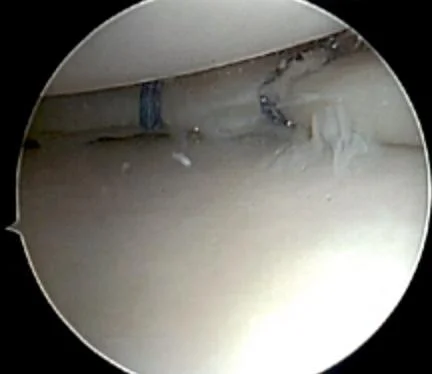
Restoring knee stability and cushioning with meniscal repair surgery
The meniscus is a vital, C-shaped piece of cartilage in the knee that acts as a shock absorber and provides joint stability. Injuries to the meniscus are common, particularly among athletes or individuals who experience twisting knee injuries. In many cases, especially for younger or active patients, meniscal repair surgery may be recommended to preserve the natural cushioning and function of the knee joint, rather than removing the damaged tissue.
Meniscal repair is a knee arthroscopy procedure designed to stitch or anchor the torn meniscus back into place, allowing it to heal and regain function. This may help reduce the risk of developing arthritis in the future and maintain better long-term joint health.
During your consultation, Dr Awwad will assess your tear pattern, activity level, and overall knee health to determine whether repair or partial removal (meniscectomy) is the most suitable approach for your injury.
What is the meniscus and what does it do?
The meniscus is a crescent-shaped piece of cartilage found in each knee joint. There are two menisci in every knee; the medial meniscus (on the inner side) and the lateral meniscus (on the outer side). These structures sit between the thigh bone (femur) and the shinbone (tibia) and play several important roles in maintaining healthy knee function.
- Shock absorption: The menisci act like cushions, helping absorb the impact forces that occur during walking, running, and jumping.
- Joint stability: They help keep the femur and tibia aligned, contributing to overall stability of the knee.
- Load distribution: The meniscus spreads weight evenly across the joint surface, reducing stress on the articular cartilage and underlying bone.
- Lubrication and nutrition: By aiding in the distribution of synovial fluid, the meniscus helps keep the knee joint lubricated and nourished.
Types of meniscal tears
Horizontal tear
Radial tear
Complex tear
Flap tear
Bucket-handle tear
Longitudinal tear
Root tear
When meniscal repair surgery may be recommended
Meniscal repair surgery may be recommended when the tear occurs in a region of the meniscus that has a good blood supply and the potential to heal. Whether repair is appropriate depends on several factors, including the type, location, and pattern of the tear, the patient’s age, and overall knee health.
Suitable tear types and locations
- Is located in the outer third (red zone) of the meniscus, where there is better blood supply to support healing.
- Is a longitudinal or vertical tear, especially if it is clean and stable.
- Is part of a bucket-handle tear that can be repositioned and sutured.
- Is relatively recent and not degenerative.
Tears in the inner (white zone) portion of the meniscus have limited blood flow and may not heal well with repair. In such cases, trimming or partial meniscectomy may be more appropriate.
Age and activity level
- Younger patients, particularly those under 40, whose tissue quality tends to be better.
- Physically active individuals, where preserving as much of the meniscus as possible can help protect the knee from future degeneration.
Associated knee injuries
Meniscal repair is often performed at the same time as anterior cruciate ligament (ACL) reconstruction, as the healing environment and rehabilitation process can complement both procedures. Addressing both injuries together may improve outcomes and reduce the risk of re-injury.
Goal of surgery
The goal of meniscal repair is to preserve the natural meniscus, which plays a critical role in joint stability, load distribution, and long-term knee function. Repairing the meniscus, when feasible, may help reduce the risk of osteoarthritis later in life
Diagnosis and imaging of meniscal injuries
Accurate diagnosis of a meniscal injury is essential for determining the appropriate treatment—whether that involves surgical repair, trimming, or non-operative management. The process typically involves a clinical assessment followed by imaging tests to confirm the extent and nature of the tear.
Clinical examination
- Reviewing your symptoms, such as joint locking, pain, swelling, or a catching sensation in the knee.
- Performing a physical examination, which may include:
- Joint line palpation (tenderness along the meniscus line)
- McMurray’s test (flexion and rotation to elicit clicking or pain)
- Thessaly test (weightbearing rotation to detect discomfort or instability)
Imaging tests
MRI (Magnetic Resonance Imaging)
- Identify the location, type, and size of the tear
- Distinguish between acute and chronic degeneration
- Reveal associated injuries (such as ACL or cartilage damage)
X-rays
- Rule out bone fractures or arthritis
- Provide a baseline view of the joint space and alignment
Arthroscopy (intraoperative diagnosis)
Meniscal repair surgery: step-by-step
Meniscal repair surgery is a minimally invasive procedure that aims to preserve the meniscus by stitching the torn edges back together. Unlike meniscectomy (where damaged tissue is removed), this technique is designed to maintain the natural function of the knee joint and reduce the long-term risk of arthritis.
1. Anaesthesia and patient preparation
The procedure is usually performed under general or spinal anaesthesia, depending on the patient’s health and preferences. The leg is positioned and sterilised, and a tourniquet may be applied to reduce bleeding and improve visibility inside the joint.
2. Arthroscopic assessment
- The location, type, and severity of the meniscal tear
- The condition of surrounding cartilage, ligaments (e.g. ACL), and joint surfaces
3. Preparing the tear for repair
4. Suturing the tear
- All-inside repair: Devices inserted entirely through the arthroscope place anchors and sutures internally. Often used for posterior horn tears.
- Inside-out repair: Sutures are passed from inside the joint to outside the capsule, then tied under the skin. Suitable for mid-body or posterior tears.
- Outside-in repair: Sutures are inserted from outside the joint into the tear. Often used for anterior horn tears.
Modern repair techniques use biodegradable implants or non-absorbable sutures designed to hold the meniscus securely while it heals.
5. Final inspection and closure
- The stability of the repair
- Range of motion to ensure there is no impingement
- Bleeding control and irrigation of the joint
6. Post-operative care
Most patients go home on the same day or after an overnight stay. A rehabilitation program is initiated soon after surgery and tailored to the patient’s procedure. Recovery may take several months depending on the complexity of the repair and whether other procedures (e.g. ACL reconstruction) were performed at the same time.
Recovery and rehabilitation after meniscal repair
Hospital stay and immediate post-operative period
- Same-day surgery: Most patients go home the same day as their operation.
- Bracing: A hinged knee brace is fitted immediately post-surgery to support the knee and protect the repair. The brace is worn locked in extension when walking and sleeping for the first 6 weeks.
- Crutches: Crutches are required to assist with partial weight bearing for the first 6 weeks. The goal is to avoid excessive pressure on the healing meniscus.
- Pain management: Medication and ice are used to control swelling and discomfort.
Weeks 0–6: Protection phase
- Weight bearing: Partial weight bearing with crutches is allowed. The knee brace remains locked in full extension during walking.
- Range of motion (ROM): Controlled passive and active-assisted ROM exercises are encouraged:
- Knee flexion is gradually increased under physiotherapy supervision.
- Aim for 0–90° of knee flexion by the end of week 6.
- Muscle activation: Quadriceps and hamstring isometric exercises begin early to prevent atrophy.
- Precautions: Avoid twisting, pivoting, or deep squats. No cycling or stair climbing unless advised by your physiotherapist.
Weeks 6–12: Transition phase
- Discontinue brace: The hinged knee brace may be removed after 6 weeks, based on surgeon review.
- Progressive loading: Transition to full weight bearing as tolerated. Crutches are weaned off gradually.
- ROM goals: Increase knee flexion towards full range by 12 weeks.
- Strengthening: Begin closed chain strengthening, balance, and proprioceptive exercises under physiotherapy guidance.
Months 3–6: Strengthening phase
- Functional training: Progressive resistance training, single-leg balance, and neuromuscular control exercises are introduced.
- Low-impact cardio: Stationary cycling, elliptical machines, and swimming are usually permitted.
- Sport-specific drills: May begin light agility and sport-specific movement patterns around 4–5 months if recovery is progressing well.
Return to sport
- Most patients return to non-contact sports and full activity between 5 to 6 months post-surgery, depending on:
- Healing of the meniscus (confirmed via clinical assessment)
- Absence of pain or swelling
- Full strength and neuromuscular control
- Contact or pivoting sports may be delayed longer to ensure graft integrity and joint readiness.
Physiotherapy support
- Regular follow-up with a physiotherapist is critical.
- Dr Awwad’s team will provide you with a structured protocol and liaise with your physio to ensure individualised progression.
Note: Timelines may vary based on your specific tear pattern (e.g. radial vs longitudinal) and surgical findings. Dr Awwad and the physiotherapist will guide your recovery and advise if any adjustments are needed to support optimal healing.
Benefits of repairing the meniscus
Preservation of shock absorption
Support for long-term joint health
Improved knee stability and biomechanics
Better outcomes for younger or active patients
Minimally invasive technique
Note: Not all tears are suitable for repair. Dr Awwad will assess the size, location, and pattern of the tear to determine the most appropriate treatment approach.
Possible risks and complications of meniscal repair surgery
Infection
Blood clots (Deep Vein Thrombosis)
Stiffness or reduced range of motion
Persistent pain or swelling
Nerve or blood vessel injury
Failure of the repair
Re-tearing of the meniscus
Arthritis progression
FAQs about meniscal repair
What is the difference between a meniscal repair and a meniscectomy?
How do I know if my meniscus tear can be repaired?
Not all meniscus tears are suitable for repair. The decision depends on the location, pattern, and severity of the tear, as well as your age and activity level. Tears in the outer third of the meniscus (the “red zone”) have a better blood supply and are more likely to heal successfully after repair. During your consultation, Dr Awwad will review your imaging and provide personalised advice on whether repair is appropriate for you.
Is meniscal repair surgery painful?
How long does it take to recover after meniscal repair?
Full recovery can take 3 to 6 months, depending on your age, overall health, and the specifics of the surgery. You will need to limit certain movements during the early recovery phase to allow the meniscus to heal. A structured rehabilitation program will be provided, and Dr Awwad will monitor your progress throughout.
Can I walk after meniscus repair surgery?
You will usually be able to walk with the help of crutches in the first few weeks after surgery. Weight-bearing will be gradually increased under guidance from your physiotherapist and Dr Awwad. It is important to follow the prescribed movement restrictions to protect the repair.
When can I return to sport after a meniscal repair?
Most patients return to sports between 5 to 6 months after surgery, depending on the type of activity and healing progress. High-impact and pivoting sports may require a longer recovery. Your physiotherapist and Dr Awwad will guide your return to activity.